






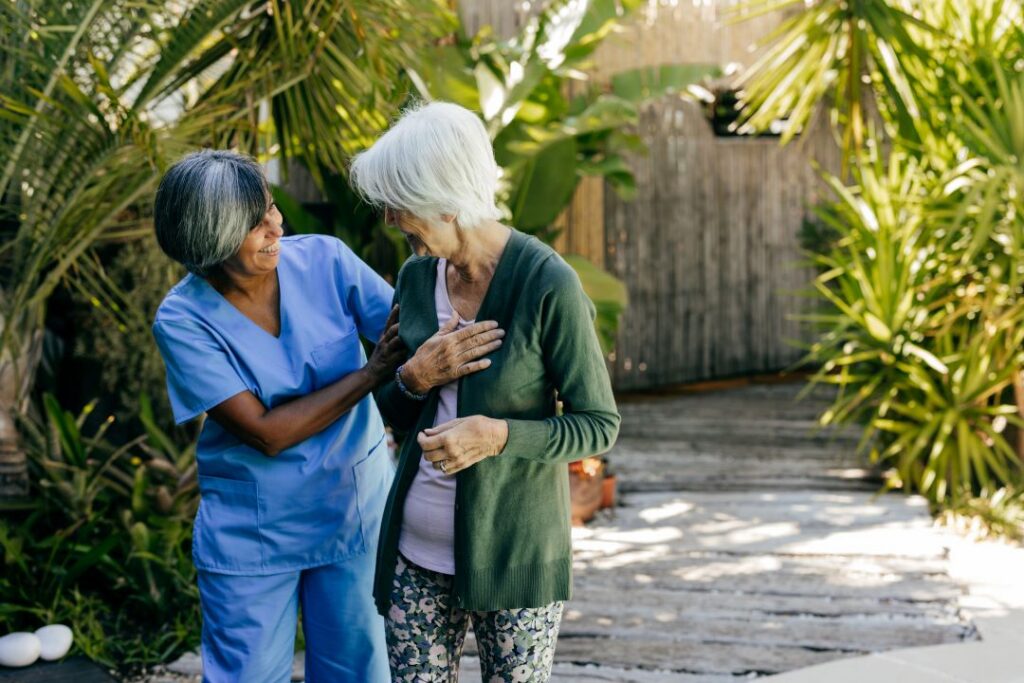
Rehabilitation is also thought of in terms of physical milestones: walking farther, getting stronger, improving balance, or increasing range of motion. These things matter. But what if we thought about rehabilitation in terms of what those improvements make possible?
During National Rehabilitation Awareness Week, September 14–20, we’re looking beyond physical recovery to something bigger: reconnecting people with the everyday activities, relationships, and experiences that make life their own. Walking farther might mean getting back to the garden. Better balance could mean feeling confident enough to meet friends for lunch. Improved hand strength might make it possible to cook a favorite meal again. Clearer speech could mean joining the conversation at a family gathering.
Different therapies, one bigger goal
Physical therapy, occupational therapy, and speech-language therapy address different needs, but all three can help people take part more fully in everyday life. The exercises and techniques within each therapy are important and a link to greater independence and participation in daily life.
Physical therapy helps people move more safely and confidently. A physical therapist may work on strength, balance, endurance, flexibility, walking, or transferring safely between a bed and chair. The real-life goal might be much more personal like having the strength to climb the steps to the front porch or the balance to walk through the grocery store.
Occupational therapy helps people do the activities that fill their days. Despite its name, “occupation” isn’t limited to employment; it includes everyday activities that give life meaning and purpose. An occupational therapist might help someone relearn how to dress, prepare a meal, safely use the bathroom, manage household tasks, or adapt an activity after an illness or injury.
Speech-language therapy helps people communicate, think, eat, and swallow more safely. After a stroke or other illness, a speech-language pathologist may work with someone on speech, language, memory, problem-solving, or swallowing. That could mean helping someone communicate what they need, follow a conversation, safely enjoy a meal, or use strategies to remember important information.
Bringing recovery home
Leaving the hospital is a major milestone. Returning home is also when recovery meets real life. At home, there are no hospital hallways with handrails. There may be stairs to climb, a bathtub to navigate, meals to prepare, medications to organize, and a favorite chair that turns out to be surprisingly difficult to get in or out of.
Home-based rehabilitation gives therapists an opportunity to work with people in the environment where they actually live. Instead of only practicing an exercise, therapy can incorporate the person’s own stairs, kitchen, bathroom, furniture, and daily routines. A 2024 study found that patients who received at least two home physical therapy visits during the first week after hospital discharge had a 43% lower risk of 30-day readmission than those who didn’t.
Home-based rehabilitation can also find problems that aren’t obvious in a clinical setting. Think of a rug that creates a fall hazard, difficulty getting into the shower, fatigue halfway through preparing lunch, or a doorway that’s difficult to navigate with a walker. Addressing these challenges can help make recovery safer and more sustainable.
More than physical recovery
Losing the ability to do everyday activities can affect more than the body. Decline in functional independence has been shown to increase depressive symptoms and decrease social participation in older adults. A vicious cycle can develop: activities become harder, people participate less, they lose social connections, and experience worsening emotional well-being.
Rehabilitation can help interrupt that cycle. A recent analysis of nearly 9,000 older adults found that exercise paired with physical, occupational, or speech therapy was among the most effective approaches studied for improving social participation. Physical activity itself may offer emotional benefits as well. There is promising evidence of improvement in depressive symptoms, particularly through therapeutic exercise.
Of course, rehabilitation cannot replace mental health treatment when it’s needed. It means recovery can touch several parts of well-being at once. And returning to meaningful activities can help someone begin to feel like themselves again.
Rehabilitation isn’t simply about returning the body to where it was before an illness, injury, surgery, or hospitalization. Sometimes recovery means finding new ways to do familiar things. Sometimes it means changing expectations or environments. And sometimes it means discovering just how much is still possible.
At Four Seasons Healthcare Solutions, our rehabilitation and home health teams help people work toward the goals that matter in their everyday lives. Because the best measure of recovery isn’t always how far you’ve come; it’s what you’re able to get back to.
What Does Recovery Look Like to You?
Therapists often build treatment around specific, meaningful goals. You can use the same approach to think about your own recovery.
- What do I want to get back to? Choose something meaningful and specific.
I want to: _________________________________________________________
Instead of “I want to get stronger,” focus on specific activities like “I want to walk to my neighbor’s house again.”
- What’s making that difficult right now?
The biggest challenge is: _____________________________________________
Consider strength, balance, pain, fatigue, communication, memory, confidence, or something in your home environment.
- What smaller step would move me closer?
My next step is: ____________________________________________________
Make it achievable. If the goal is to prepare dinner independently, the first step might be standing safely at the counter for five minutes.
- Who can help?
My support team includes: ___________________________________________
Think about your physical, occupational, or speech therapist, healthcare providers, family, friends, caregivers, or others who can support your progress.
- How will I know I’m making progress?
I’ll know I’m getting closer when: _____________________________________
Recovery doesn’t always happen in one big leap. Notice the smaller victories along the way.