






Bones are easy to forget about—right up until they become impossible to ignore. They are the quiet support system of the body, helping us stand, walk, reach, bend, and move through the routines of daily life. May is National Osteoporosis Awareness and Prevention Month, making it a natural time to pause and check in on this often-overlooked foundation of good health.
Osteoporosis develops when bone density and bone quality decline. This “silent disease” increases the risk of bone fractures but typically doesn’t have symptoms. Approximately 10 million Americans have osteoporosis and an additional 44 million have low bone density making them at risk for the disease. Prevention is key.
Bone health is big
When people think about osteoporosis, calcium is often the first thing that comes to mind. Calcium plays an important role in building strong bones, but bone health depends on more than just calcium.
- Muscle strength helps keep bones strong by placing healthy stress on them, encouraging density.
- Balance supports steady movement and helps prevent falls, which is key to protecting bones.
- Mobility matters because long periods of sitting can weaken skeletal health, while even light, regular activity can make a meaningful difference.
Bone health is not just about one break, test result, or diagnosis. It is shaped by daily habits, physical strength, medication routines, nutrition, and the safety of the spaces where people live. In other words, stronger bones are not built by one dramatic change. They are supported by a structure of everyday care.
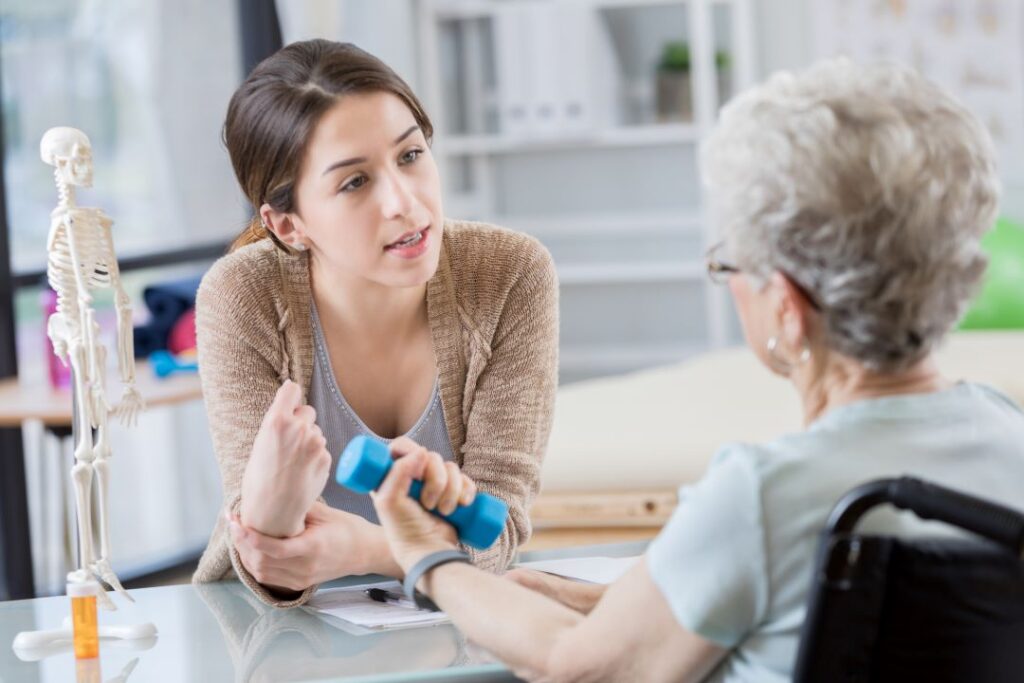
For example, physical therapy can help lower risk before a serious fall happens. Balance-focused movement, strength-building, and gait support are key parts of reducing fall risk. A personalized therapy plan can focus on practical goals: getting up from a chair more safely, moving more steadily on stairs, improving posture, or rebuilding leg strength after illness or hospitalization. Those gains may sound simple, but they can directly support bone health and independence.
Occupational therapy can also be part of that picture by helping people adapt daily routines and living spaces so they can move more safely and confidently. Sometimes the goal is not just to make a person stronger; it is to make everyday life work better for them.
An often-missed piece to bone health is medication safety. Some medicines can cause dizziness, confusion, sedation, or balance problems which increase fall risk. Other prescriptions have been directly associated with bone loss. Pharmacy services can perform a medication review that can help find side effects, simplify schedules, reduce duplication, and flag combinations that may increase fall risk. Protecting the whole person means protecting bone health.
Protect your bone health
Bone health is a long-term issue, but there are practical steps people can take right now. Small actions add up to create a stronger bone structure for aging. Here are three you can check off this week:
- Clear the path. Loose rugs, cords, clutter, poor lighting, and uneven steps can all raise fall risk. Simple recommended home changes include improving lighting, removing tripping hazards, keeping often used items within easy reach, and adding support like grab bars when needed.
- Review medications. Recent and new dizziness, sleepiness, confusion, or unsteadiness could be due to medicines. Talk with your healthcare provider and review medication side effects.
- Build strength. Weight-bearing activity and balance exercises can improve muscle strength, balance, and coordination – while reducing the likelihood of falling.
Better bone health starts with paying attention to our every day. It’s not only about whether bones are being treated, but whether the right aid is in place to help someone stay steady, strong, and safe over time. Because a good life doesn’t just happen on the surface—it’s built on what lies beneath.