





What happens when the care you need today isn’t the care you’ll need tomorrow?
Healthcare needs rarely stay the same. They can change gradually with age, suddenly after an illness or injury, or temporarily during recovery. The good news is that receiving more care doesn’t always mean leaving home. Different services can work together to provide the right level of support as circumstances change.
National Care at Home Month is a good time to explore the continuum of home-based care: how different types of support connect, overlap, and change with a person’s needs.
The continuum of care
A continuum of care is a connected range of healthcare and support services that can meet a person’s changing needs over time. Rather than treating each service as a separate solution, the continuum recognizes that people may need various kinds of assistance at different points in their lives.
For example, someone recovering from a hip replacement may need skilled nursing and physical therapy at home. As recovery progresses, those services may end, while help with bathing, shopping, or meal preparation continues. Someone managing a long-term illness may need ongoing personal care, periodic home health services, and added clinical support when symptoms change.
Although these services sometimes overlap, they serve different purposes.
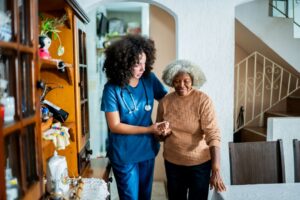
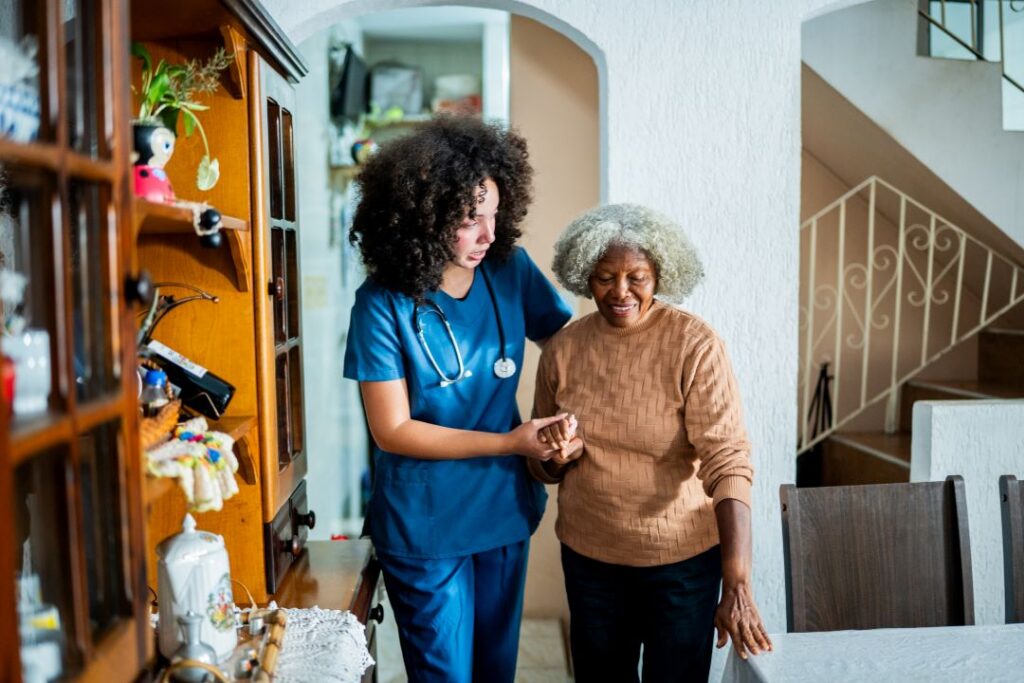
- Home care generally provides non-medical help with daily activities such as bathing, dressing, meals, and mobility.
- Home health care provides skilled clinical services, such as nursing, physical therapy, occupational therapy, or speech-language therapy, when medically appropriate.
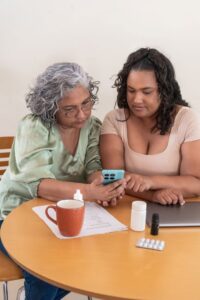
- Other services, including pharmacy support, rehabilitation, therapy, medical equipment, and chronic disease management, may be part of a person’s broader care plan.
Care also doesn’t always progress in one direction. Someone may need intensive support after hospitalization and much less help a few months later. Another person may gradually need more assistance as a condition progresses. A good continuum is flexible enough to respond to both.
Finding care to fit
So, how do you decide which type of home-based care fits your needs? Start with the question that best describes your current situation. More than one type of support may be right.
- Do you need help with everyday activities? Then, personal home care may be the answer; they take care of bathing, dressing, meals, mobility, and household routines.
- Do you need medical care or therapy at home? Skilled home health provides nursing, physical therapy, occupational therapy, and speech therapy.
- Do you need both personal and medical support? Look into combined services which have home care and home health working together.
- Do you have ongoing or changing health needs? Coordinated support is a combination of home care, nursing, pharmacy, dialysis, or adult day health services.
Regardless, talk with your healthcare provider or a care coordinator to figure out which services fit your needs and coverage.
Fitting the care together
Understanding the different services is helpful but seeing how they fit together makes the continuum easier to imagine. Consider these five common situations.
- From hospital to home after surgery. Following a knee replacement, someone may return home with skilled nursing visits to watch recovery and physical therapy to rebuild strength and mobility. A home care aide might help with bathing, dressing, and meals until the person can manage those activities independently. As recovery continues, the amount of assistance can decrease.
- From rehabilitation to independent living. After a stroke, someone may spend time in a rehabilitation facility before returning home. Home-based physical, occupational, and speech-language therapy can help them continue working on movement, everyday tasks, and communication. Family members can learn how to support these goals between visits.
- From occasional help to regular home care. An older adult who once needed help only with shopping may begin having difficulty preparing meals, bathing safely, or managing household routines. Increasing personal care visits can provide practical aid without requiring a move to a residential facility.
- From stable chronic illness to more medical support. Someone managing diabetes or heart disease may develop new symptoms or experience a hospitalization. Skilled home health services can help with clinical monitoring, medication education, and recovery, while personal care continues to support daily activities. As health stabilizes, skilled services may decrease.
- From family-only care to shared responsibility. A spouse who has been providing most of the care for a loved one with dementia may find the responsibilities increasingly demanding. Adding home care for personal aid and an adult day health program for structured activities, nursing support, and social interaction can help meet the individual’s needs while giving the family caregiver time to rest.
At Four Seasons Healthcare Solutions, we offer different forms of support across the care continuum. By connecting services and recognizing when needs change, we help individuals and families navigate care with greater confidence. Care transitions are not always about moving from one place to another. Sometimes, the most important transition is adding, changing, or reducing services while staying at home.