





When most people hear ‘Parkinson’s,’ they picture a trembling hand. But for the nearly one million Americans living with the condition — and the 90,000 more newly diagnosed each year — Parkinson’s is so much more than that one image.
Parkinson’s is a progressive neurological condition and the second most common age-related neurodegenerative condition in North America. It develops when the nerve cells in the brain that produce dopamine gradually decline. Dopamine is the brain’s movement messenger; when those signals weaken, everything from walking to speaking to swallowing can change. Common symptoms include:
- Tremors or shaking, especially at rest
- Muscle stiffness that makes movement feel slow or rigid
- Bradykinesia, or slowed movement and reflexes
- Balance challenges and changes in walking (like shorter, shuffling steps)
- Softer speech, reduced facial expression, or difficulty swallowing
But here’s the truth that matters most: with the right support, the right adaptations, and the right team around them, many people with Parkinson’s continue to live active, engaged, meaningful lives for years after diagnosis.
Therapies for quality of life
Rehabilitation therapies are among the most powerful tools available for people with Parkinson’s.
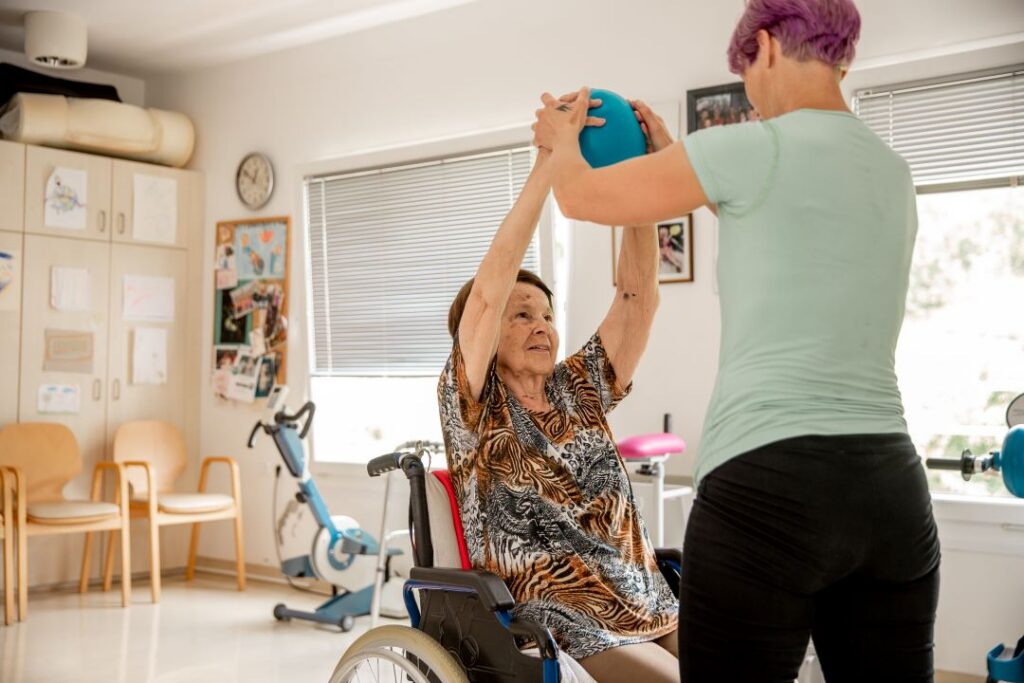
Physical therapy (PT) focuses on the building blocks of safe movement: strength, balance, flexibility, and gait. Physical therapists collaborate with patients on targeted exercises designed to counteract the very changes Parkinson’s creates. They encourage larger, more deliberate steps, better posture, and the kind of full-body coordination through gait and balance training, resistance training, and regular exercise.
Occupational therapy (OT) zooms in on daily life. Occupational therapists help individuals adapt the everyday tasks that matter most. Supporting activities like getting dressed, cooking a meal, and moving safely at home ensure those with Parkinson’s remain independent. Evidence-based treatments and aids can help posture, rigidity, and bradykinesia as well as improving sleep, vision, and cognition.
Speech therapy (ST) addresses both communication and safe eating. Voice changes are often among the earliest non-motor signs of Parkinson’s. ST exercises can rebuild vocal strength and clarity, helping individuals speak more comfortably and be heard more easily. Difficulty swallowing affects more than 80% of people with Parkinson’s and can cause aspiration pneumonia, one of the leading causes of death in Parkinson’s. Speech therapists can assess, create personalized swallowing exercises, and teach mealtime strategies so those with Parkinson’s can eat and drink safely for as long as possible.
Safety tips for home life
Many falls don’t happen during exercise or therapy; they happen in familiar spaces, during routine moments. Because Parkinson’s affects balance, coordination, and reaction time, home safety is critical. Simple, affordable changes can make a meaningful difference, including:
- Clearing walkways. Loose rugs, electrical cords, and cluttered hallways are among the most common fall triggers for people with Parkinson’s.
- Installing grab bars and railings. Adding grab bars in the bathrooms and stair railings at stairways gives people a reliable handhold during the transitions when balance challenges are greatest.
- Turning up the light. Parkinson’s can affect depth perception and visual processing. Brighter lighting in hallways, bathrooms, and entryways helps the brain make sense of the environment and reduces the chance of missteps.
- Choosing chairs with arms. Being able to push up from a seated position, rather than relying solely on leg strength, makes rising from a chair safer and more independent.
- Opening up the space. Rearranging furniture to create wider areas gives individuals space to move with intention. Open space is especially valuable for people using assistive devices or practicing the wide-stance, deliberate gait that physical therapists recommend.
None of these changes require a major renovation. Each one is a small investment with a potentially large return: fewer falls, more independence, and the confidence to move through daily life without fear.
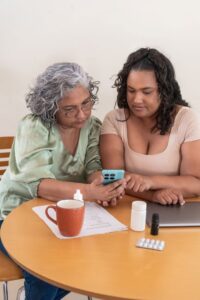
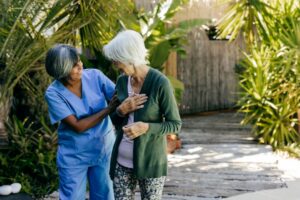
Living well with Parkinson’s is rarely a solo journey. Family members and professional caregivers provide practical help and champion movement strategies.
A caregiver can gently remind a loved one to “take a big step” or “slow down and reset.” Professional caregivers bring additional expertise in medication management, recognizing changes in symptoms, and supporting safe mobility as the condition evolves.
Four Seasons specializes in Parkinson’s support; reach out to see how we can help you and your loved ones. Because when we all move together in small ways to support loved ones with Parkinson’s, we can make a huge impact.